I. Settling the Account: What Goes Up Must Come Down
Offshore trusts have been the go-to tool for high-net-worth individuals over the past two decades to isolate assets, transfer wealth, and minimize taxes.
On July 24, 2026, the Treasury Department and IRS issued Announcement 2026-21, effective immediately. Assets held in offshore trusts are now subject to taxation.
For the past twenty years, the standard playbook for wealthy entrepreneurs has been straightforward: place equity stakes into family trusts in the Cayman Islands or the British Virgin Islands, watch them appreciate tax-free, collect dividends without taxation, and pass them to heirs without triggering estate taxes. The new offshore trust tax guidance has shattered this unwritten rule of the wealth-building elite.
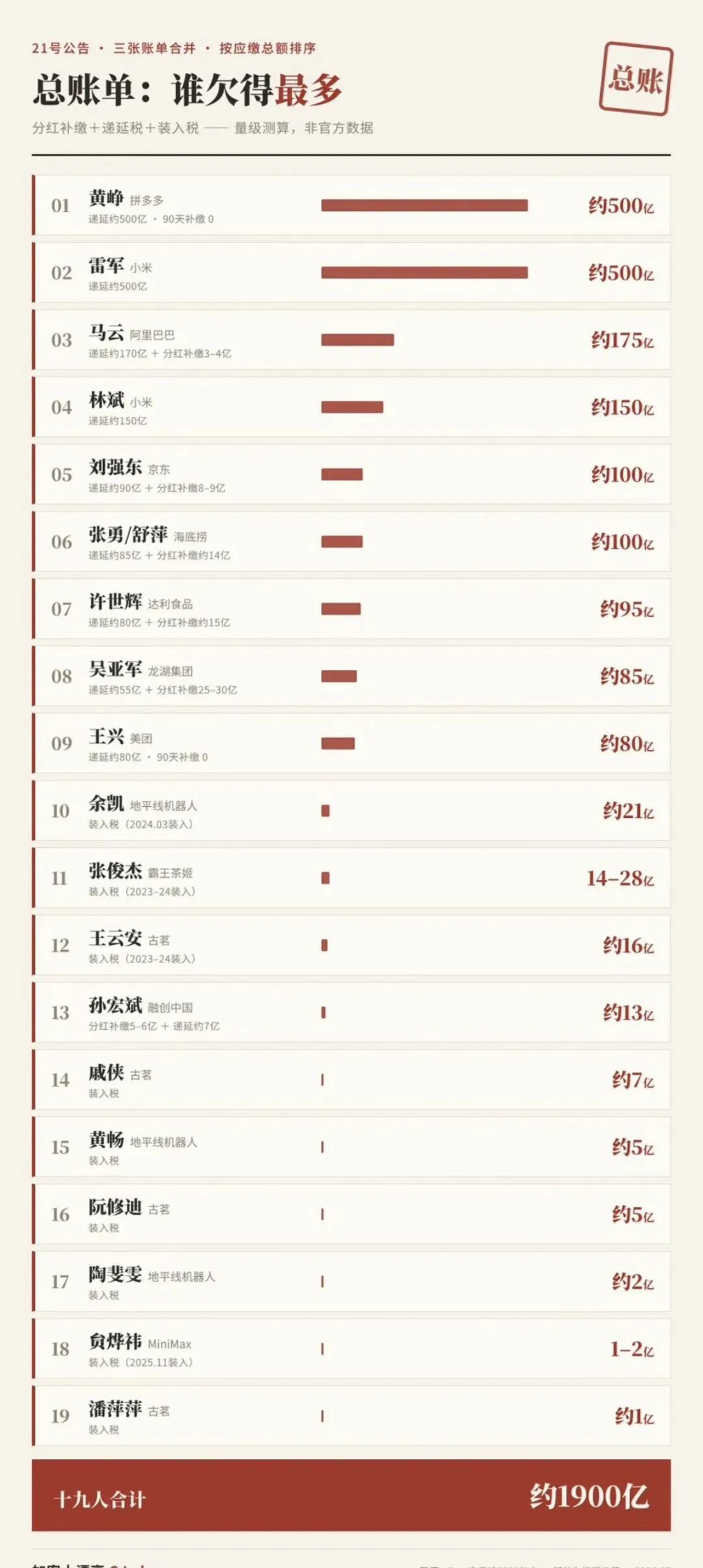
The rules themselves are not complicated. Taxation occurs at three key moments:
At Setup: When assets are placed into the trust, they are taxed based on fair market value minus cost basis at a rate of 20%—even though the property hasn't been sold and no cash has been received yet.
During the Trust Term: Each year thereafter, any income earned by the trust is taxed at 20%, regardless of whether it's distributed to the settlor. Management fees and legal expenses cannot be deducted, and losses cannot offset gains.
At Termination: When the trust ends, the settlor changes citizenship, or passes away, a final accounting is done at current market value and taxed accordingly.
Looking at the 20% rate in isolation, it appears moderate. The US top trust tax rate reaches 37%, and Japan taxes trust beneficiary interests at rates up to 55%.
The real weight of this announcement lies in two places:
First, the tax is due before the gain is actually realized. Second, back taxes are owed—trusts funded after 2023 must be retroactively reported, and income earned by trusts before 2025 must be paid within ninety days. No penalties apply if paid now; after that deadline, penalties accrue.
Much information about wealthy individuals' tax bills is circulating online. Let's break down the IRS guidance into three separate tax bills to understand which wealthy individuals face the largest catch-up payments.
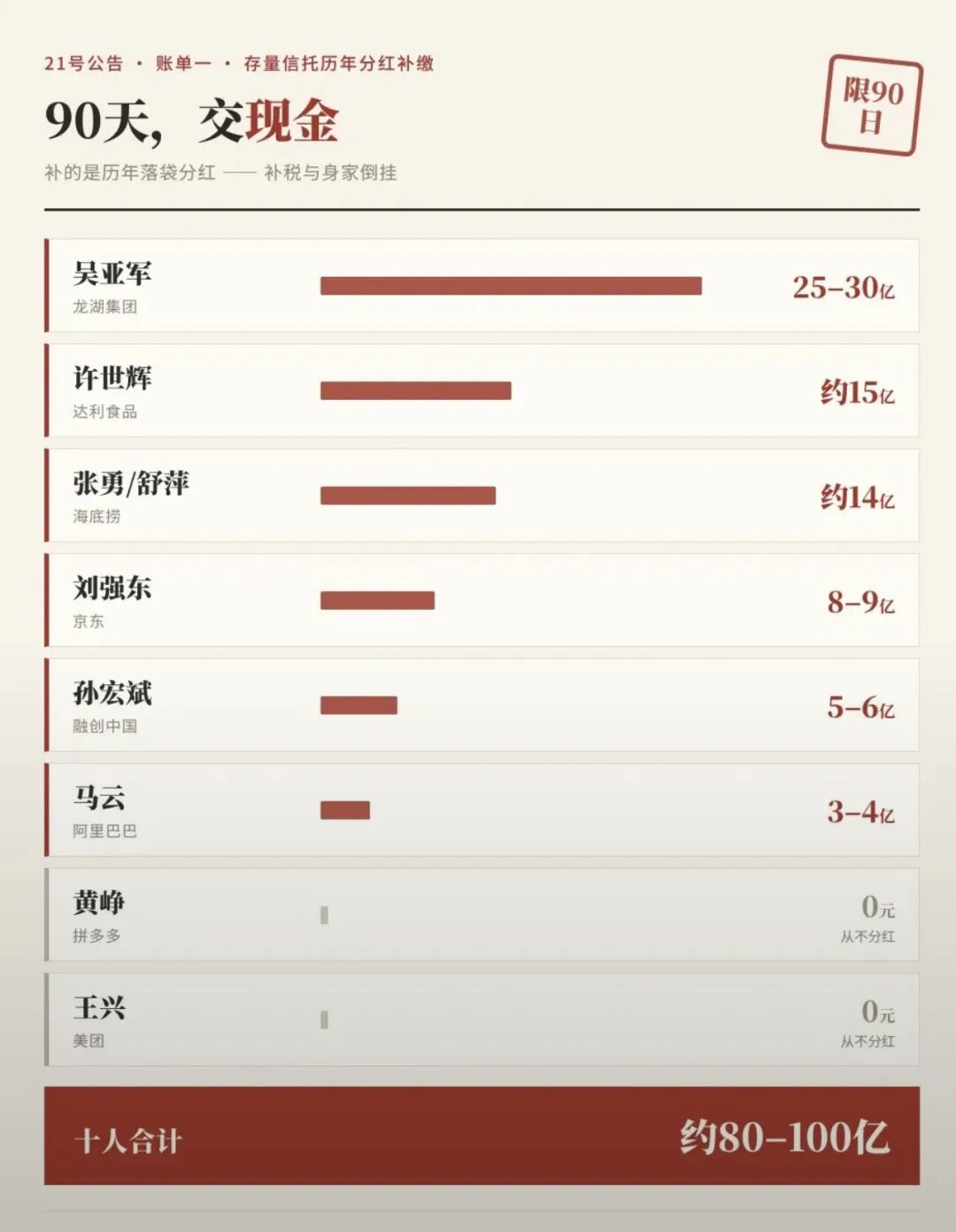
First is the ninety-day catch-up on dividends and gains actually received by trusts over the years. The size of this first bill has nothing to do with total wealth—only with whether a company pays dividends.
The heaviest hit goes to those whose companies have paid consistent dividends. Real estate developers, for instance, typically distribute substantial annual cash to shareholders, and now those same distributions trigger retroactive taxes.
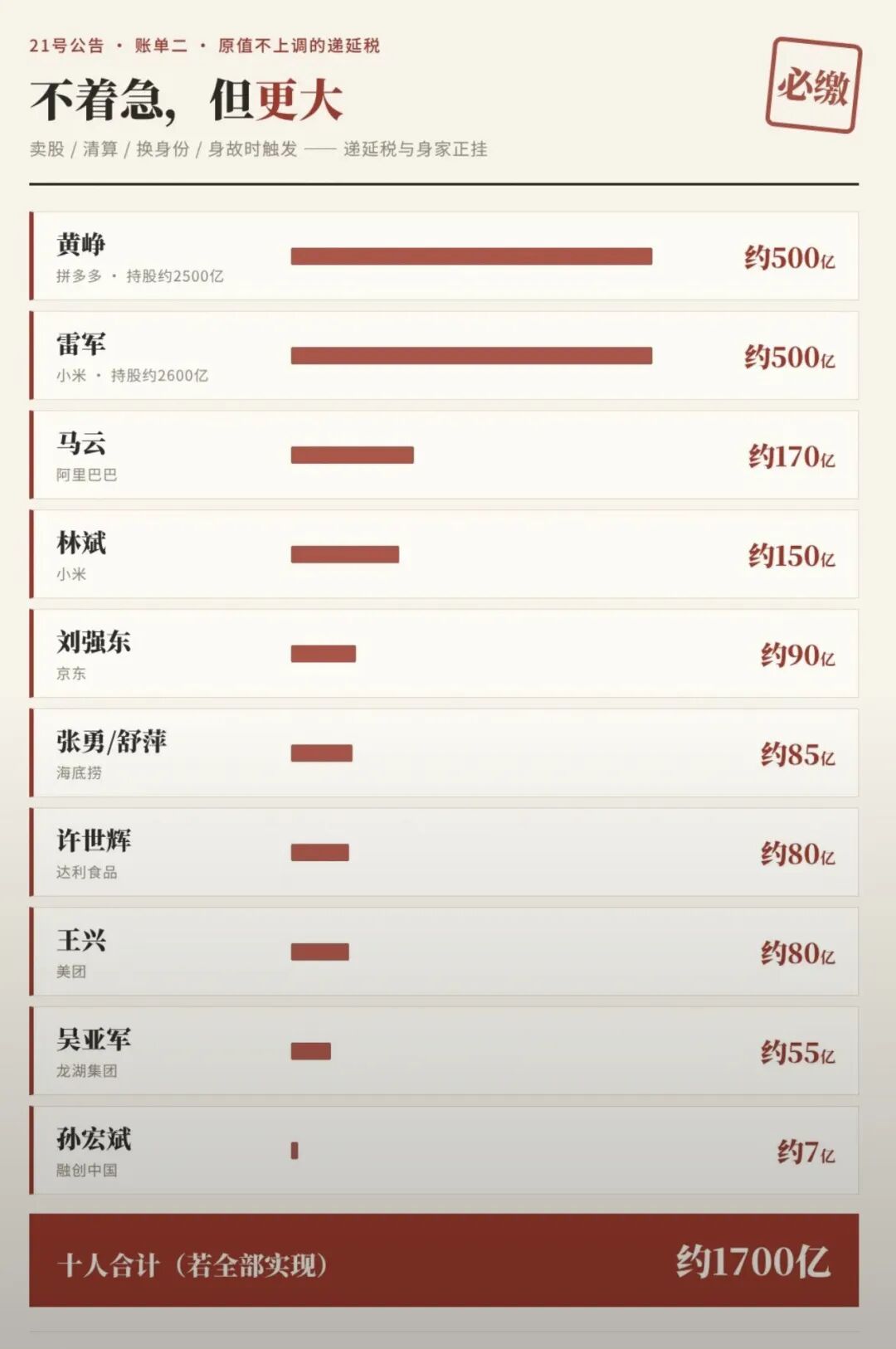
The second bill is deferred tax on unrealized gains.
Stock holdings in trusts retain their original cost basis from before the company went public. Whenever those shares are eventually sold, the entire appreciation from that historical cost to current market value is taxed in full. For successful founders, the original cost basis is extremely low, so the tax base on appreciation is essentially the current market value.
Consider a founder holding roughly one-quarter of a major tech company worth approximately $250 billion. The deferred tax bill on that position alone could approach $50 billion. Similar calculations apply to other major shareholders. Ten of the wealthiest individuals combined could face approximately $170 billion in deferred gains taxes—nearly twenty times the size of the first bill.
The third bill is the setup tax on newly funded trusts.
If a wealthy individual established a trust after January 1, 2023, they owe a 20% tax on the assets placed into it. This primarily affects founders of recently listed companies.
For example, a founder of a robotics company who funded a trust in March 2024 at a $63 billion valuation faces approximately $2.1 billion in setup taxes. Founders of a popular beverage chain face roughly $1.6 billion each, with four co-founders totaling nearly $3 billion. Other recent IPO founders face bills ranging from $1.4 billion to $2.8 billion.
Not all public companies are affected: some founders established trusts before the retroactive date and escaped the new rules entirely. Others use direct holding structures and never set up offshore trusts in the first place.
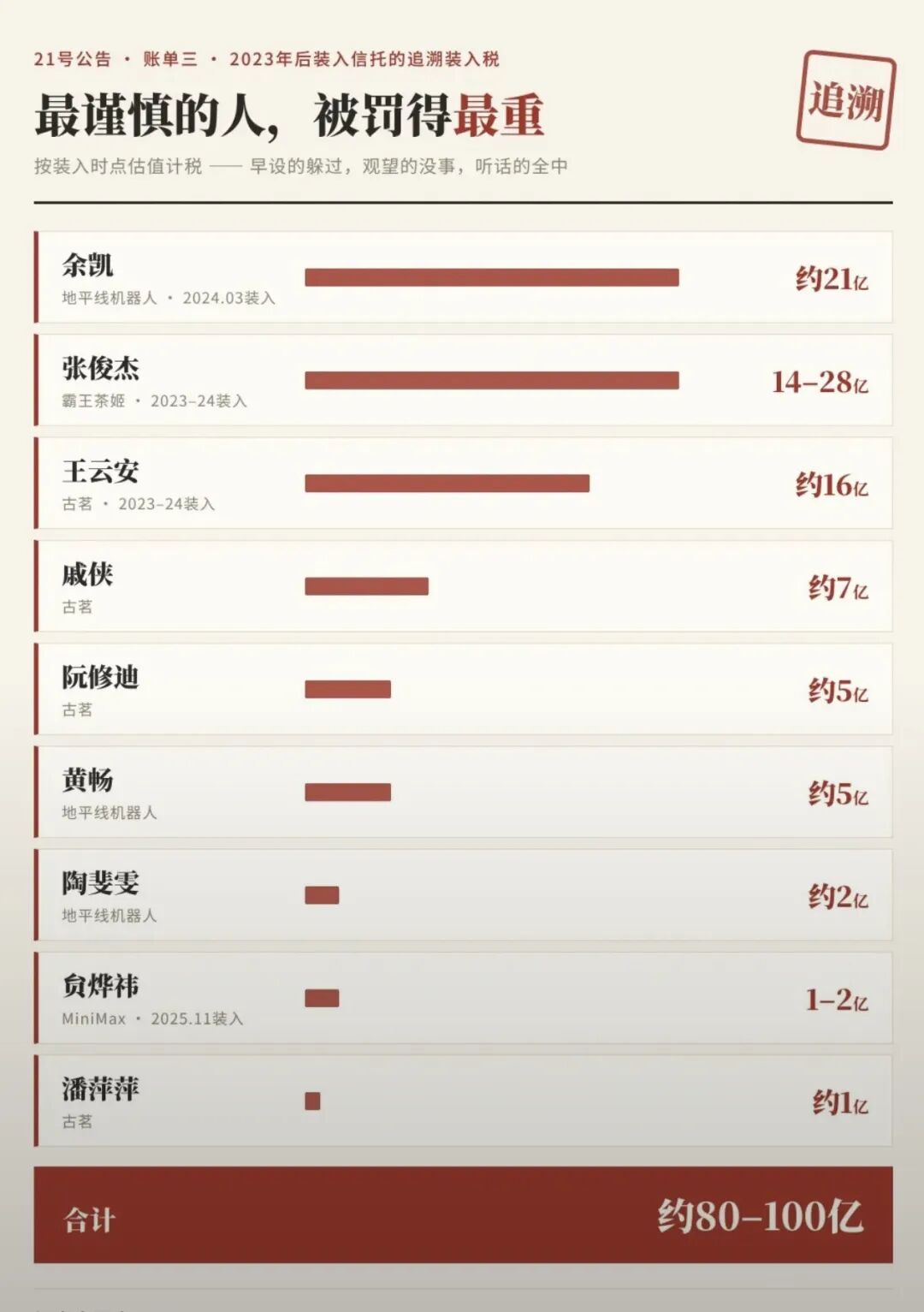
Interestingly, 2023 to 2025 were the peak years for offshore trust establishment. Those who set up trusts before 2023 avoided retroactive taxation. Those who waited after 2025 faced no impact. The cohort caught in the middle—those who completed their arrangements during these three years—faces the full force of the new rules.
Looking at all three bills together, the policy intent is clear: tax current cash flow now, tax unrealized gains later, and tax new contributions from the start.
Offshore trusts as tax-avoidance vehicles have essentially lost their value. What remains are the non-tax functions: asset protection and succession planning.
II. Piercing the Veil: Nowhere Left to Hide
The new rules pierce through complex trust structures that were previously opaque.
Consider a typical offshore arrangement: Founder → Offshore Trust → Trustee → Foreign Holding Company → Company Stock.
The new guidance makes clear that "funding an offshore trust" includes not just transferring assets directly to a trustee, but also transferring them to any foreign entity that the trust or trustee holds, controls, or manages.
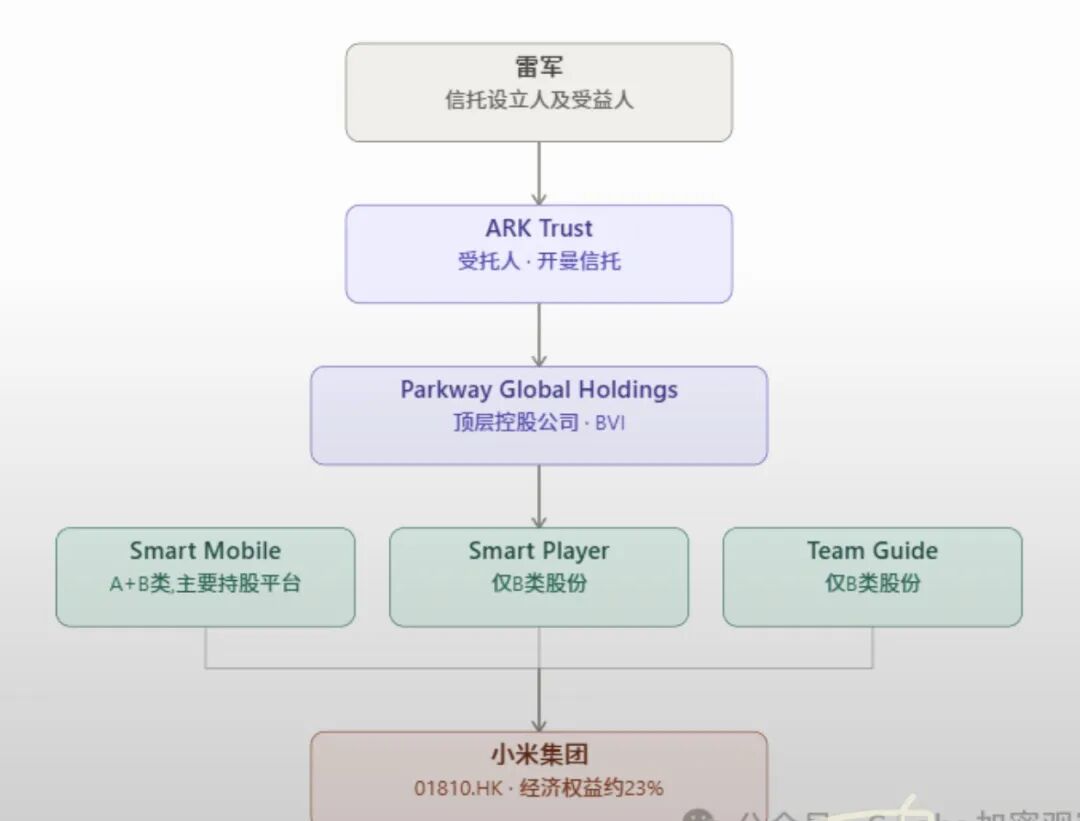
How major shareholders respond to these retroactive tax bills will determine whether the new rules are actually enforced:
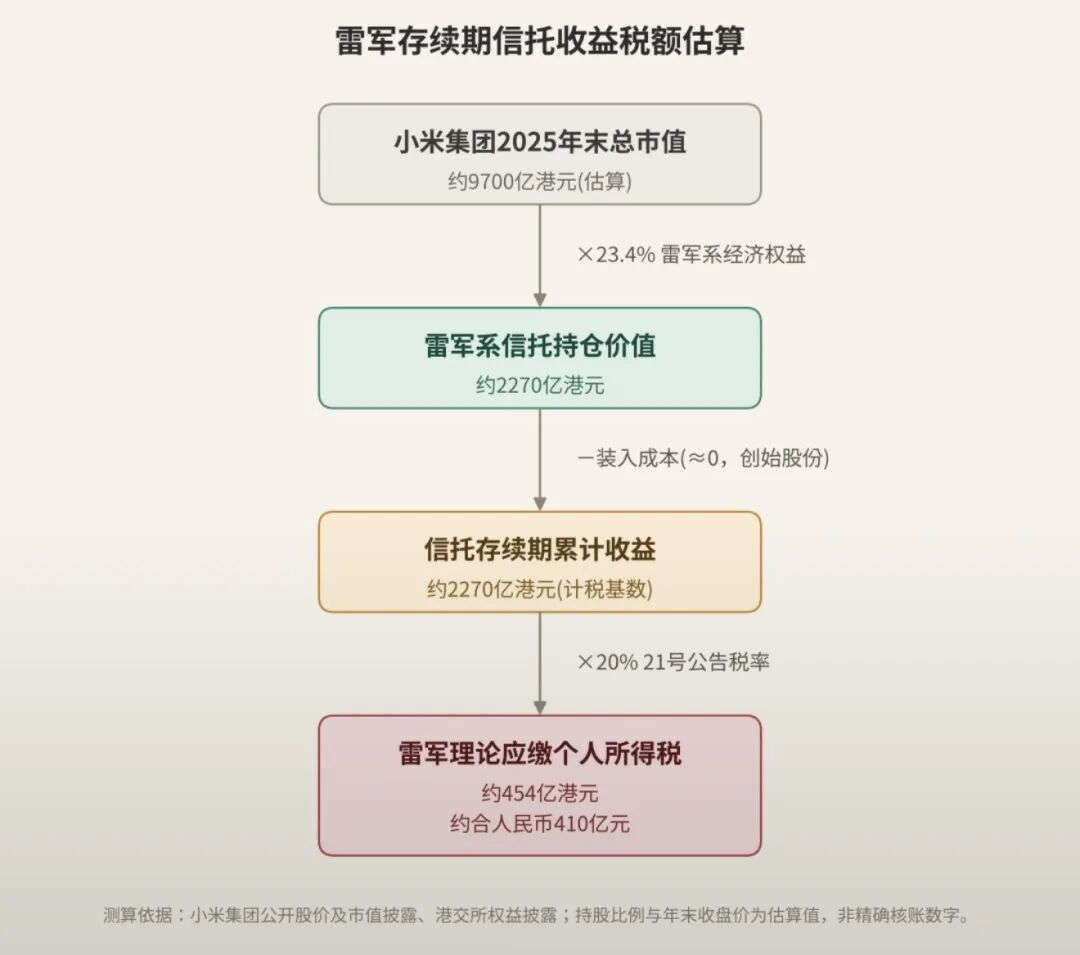
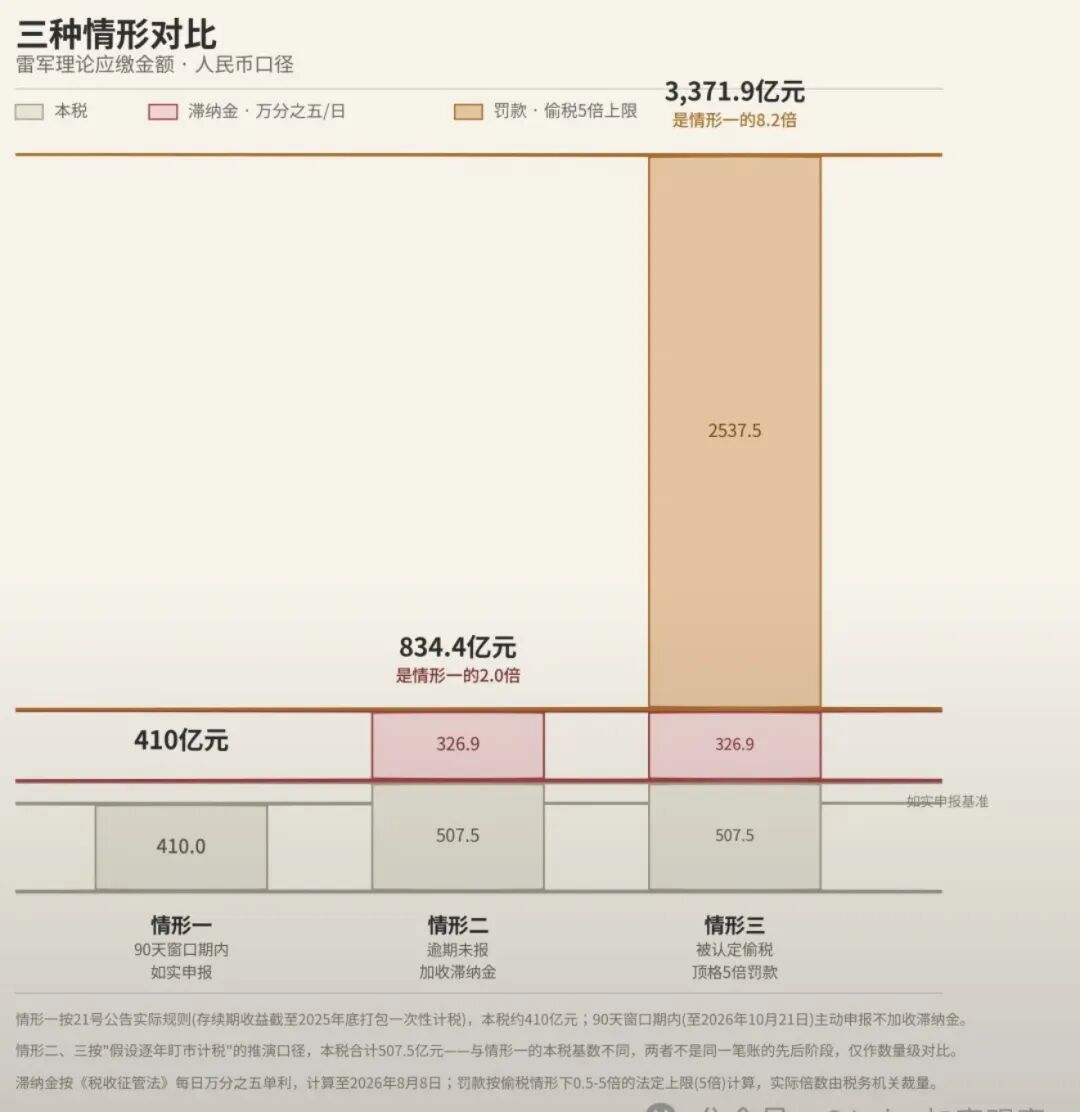
Exposing hidden wealth structures has become a spectator sport, and the accuracy of reported figures and enforcement standards fuel endless speculation and debate.
But is playing cat-and-mouse with the tax authorities really the point of building wealth? That's a question worth reflecting on.


This article is educational content, not insurance, investment, tax, or legal advice. Consult a licensed professional about your specific situation.